
Air Duct Mold Removal in Tulsa, OK: Clean or Replace?
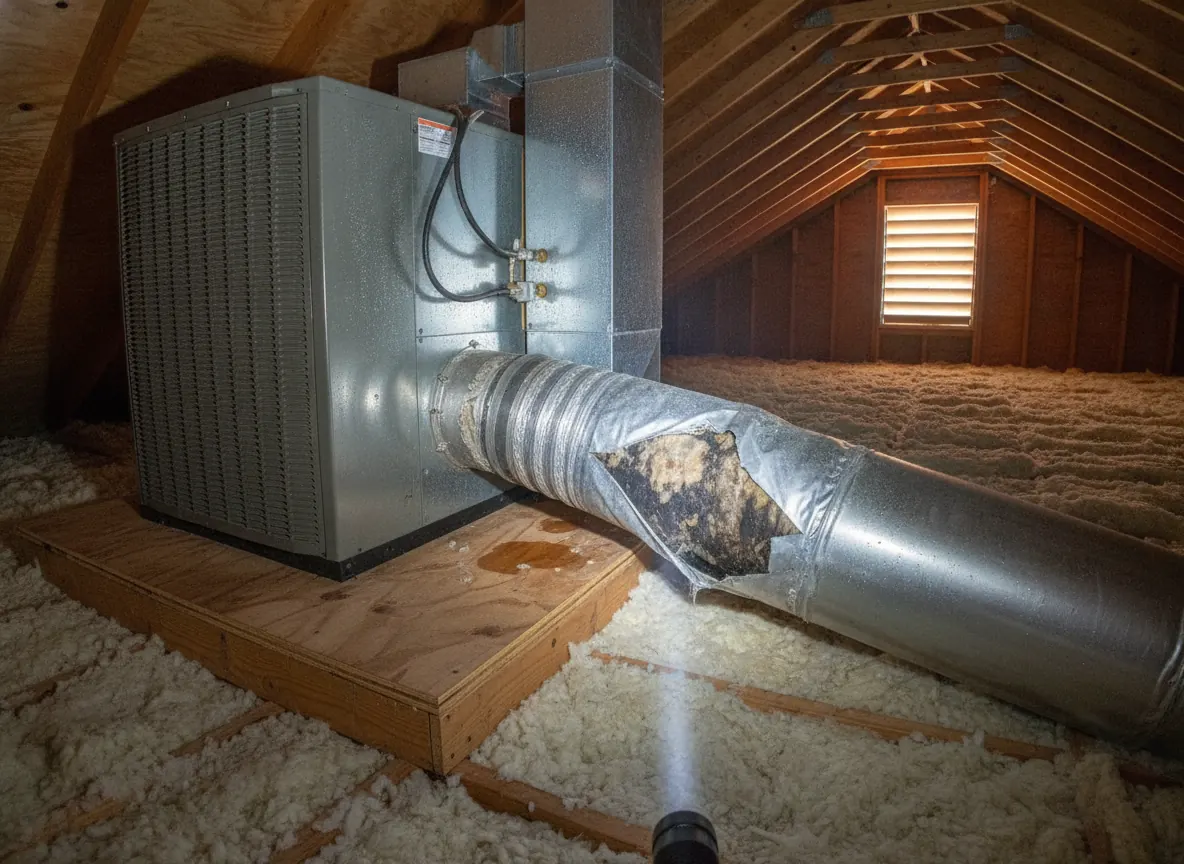
Air duct mold removal in Tulsa, OK comes down to two questions: what the duct is made of, and why it got wet. EPA does not recommend routine duct cleaning, only cleaning when ducts are visibly contaminated with substantial mold growth. Bare sheet metal can usually be cleaned. Wet or moldy fiberglass duct insulation and duct board cannot be cleaned and should be replaced. And unless the moisture is fixed, EPA says the mold will come back.
This guide covers where duct mold starts in Tulsa-area homes, what EPA says about cleaning it, and how to tell a sensible quote from one that only sprays the problem. Tulsa Mold Remediation Pros is a free quote service, not an HVAC or mold company.
Why air ducts grow mold in Tulsa homes
Tulsa’s cooling season is long and muggy. NOAA’s 1991–2020 normals for Tulsa International Airport show about 74 days a year at 90 F or hotter, and a mean July dew point near 69 F. Supply ducts carry air much colder than that for months. Wherever humid air reaches the cold duct (a torn insulation jacket, a leaky joint, a loose boot at a ceiling register), water condenses, and the dust on or inside the duct stays damp long enough to grow mold.
Where your ducts run changes what goes wrong:
- Attic ducts in newer suburbs. Most homes in Jenks, Bixby and Owasso were built since 2000, and many put the air handler and ducts in a hot attic. Sweating flex duct drips onto insulation and the ceiling below, often showing up first as spots around a register.
- Crawl space ducts in older Tulsa. The city’s median home was built in 1973, and about 65% of homes predate 1980. Many older homes sit over a crawl space, where ducts run through damp air above red clay soil, and leaky returns can pull that musty air into the house.
- Air handler closets. A clogged condensate drain can overflow the pan and soak the duct connections at the plenum, even in a home with no attic or crawl space ducts.
If your smell or spotting started with a drain pan, our post on AC condensation mold in Tulsa summers walks through the drain side. This post is about the ducts themselves.
What EPA says about duct cleaning for mold
EPA updated its homeowner guide on duct cleaning in February 2026. The points that matter for mold:
- Clean only as needed. EPA does not recommend routine duct cleaning. Visible, substantial mold growth inside hard-surface ducts or on other parts of the heating and cooling system is one of the cases where cleaning makes sense.
- Wet or moldy fiberglass gets replaced. Fiberglass duct insulation that is wet or moldy cannot be cleaned and should be removed and replaced. That includes duct board and lined duct.
- No steam or water. EPA says steam cleaning and other methods involving moisture should not be used on any kind of duct work.
- Sprays are not a fix. Biocides and sanitizers have not been shown to be effective in duct cleaning, and none are EPA-registered for use on fiberglass duct board or lined ducts.
- Fix the cause. In EPA’s words, “If the conditions causing the mold growth in the first place are not corrected, mold growth will recur.”
Be wary of a fog-only quote. A quote that sprays or fogs the ducts and changes nothing else leaves the moisture and the moldy insulation in place. Ask what will be cleaned, what will be replaced and what will stop the water. Any mold can bother sensitive people; see a doctor about symptoms.
Clean or replace: matching the fix to the duct
| What you have | Usual approach | Why |
|---|---|---|
| Bare sheet metal trunk or boots with visible growth | Clean, then fix the moisture | Hard surfaces can be cleaned; EPA lists visible mold as a reason to clean |
| Flex duct with wet or moldy insulation | Replace the affected runs | EPA: wet or moldy fiberglass insulation cannot be cleaned |
| Duct board or internally lined duct with growth | Replace the affected sections | No biocide is EPA-registered for these surfaces |
| Musty smell, no visible growth | Find the moisture first | Cleaning without a cause can miss the real problem |
When the source is hidden, an independent mold inspection with moisture readings can show whether the ducts, the air handler or a wet wall is behind the smell before anyone starts cutting or cleaning.
Hiring for HVAC duct mold cleaning near you
Duct mold jobs in Oklahoma usually need two trades. A mold company handles moldy materials and cleaning. Repairs to the ducts, drain or equipment are mechanical work for a CIB-licensed mechanical contractor (Oklahoma Construction Industries Board), and in Tulsa mechanical permits are pulled only by CIB-licensed contractors. Questions worth asking:
- Which sections will you clean, which will you replace, and why?
- Will you spray or fog anything? What product, and is it registered for this use?
- What caused the moisture, and who is fixing it?
- Who does the mechanical work, and what is their CIB license number?
- How will the rest of the house be protected while the system is open?
- In a pre-1980 home, should old duct wrap or tape be tested for asbestos before it comes out? (Asbestos is regulated by the Oklahoma Department of Labor.)
- Can I see your insurance certificate and an itemized, written contract?
Our HVAC and AC mold page covers the full system. The Oklahoma hiring checklist covers contracts and cancel rights.
What duct mold work costs in Tulsa
Published ranges put HVAC and duct mold work at $3,000–$10,000 (Fixr 2025; This Old House 2026). These are published estimates, not quotes. Replacing duct runs costs more than cleaning metal, and attic access, the number of runs and the mechanical repair all move the price. See the Tulsa mold remediation cost guide for the full table. If you plan to sell, keep the invoices: Oklahoma’s seller disclosure form asks about water in the heating and air conditioning duct system.
Frequently asked questions
Should I get my air ducts cleaned for mold in Tulsa?
Only if there is a reason. EPA does not recommend routine duct cleaning; it says cleaning makes sense when hard-surface ducts or other parts of the system are visibly contaminated with substantial mold growth. Fix the moisture first, or the mold will come back.
Can moldy duct board or flex duct be cleaned?
EPA says wet or moldy fiberglass duct insulation cannot be cleaned and should be removed and replaced. That covers duct board, lined ducts and the insulated layer of flex duct. Bare sheet metal can usually be cleaned.
Does spraying or fogging the ducts kill mold?
EPA says biocides and sanitizers have not been shown to be effective in duct cleaning, and none are EPA-registered for fiberglass duct board or lined ducts. It also says steam and other moisture-based methods should not be used on any duct work. Ask any company that offers spraying to name the product and its registered use.
Get quotes for air duct mold in Tulsa and Green Country
Tell us where the ducts run (attic, crawl space or closet), what you see or smell, and whether the drain has overflowed. Independent companies across Tulsa, Broken Arrow, Jenks, Bixby and Owasso can reply with quotes that spell out what gets cleaned, what gets replaced and what fixes the water. Request a free quote or call (918) 478-8410.
Seeing or smelling mold? Get a clear plan.
Free, no-pressure quotes from independent companies across Tulsa, Broken Arrow, Owasso, Bixby, Jenks and Green Country.